
A building is truly only as strong as the ground it stands on. In the world of commercial and residential development, there is a temptation to rush toward the visible milestones—pouring the concrete, framing the walls, and raising the roof. However, skipping or rushing through the crucial preliminary steps of site preparation is consistently the leading cause of massive budget overruns, frustrating timeline delays, and catastrophic structural failures down the line. When a foundation cracks because the earth beneath it was improperly compacted, or when an entire project is halted due to a ruptured underground utility line, the true cost of poor preparation becomes painfully clear.
Proper groundwork goes far beyond simply moving dirt from one side of a lot to another. It is a highly calculated, multi-phase process that ensures safety, strict regulatory compliance, and a smooth, uninterrupted workflow for the remainder of the project. A well-prepared site mitigates environmental impact, protects the surrounding community, and creates a highly organized canvas for the builders.
This comprehensive guide will walk you through the essential phases of preparing a site for building. We will cover everything from the initial boundary mapping and meticulous soil testing to the heavy lifting of earthmoving, establishing secure access roads, and implementing necessary drainage systems. Whether you are developing a sprawling commercial complex or a single-family home, the principles outlined here will provide a solid, reliable foundation for your next project.
Conducting a Thorough Site Assessment and Survey
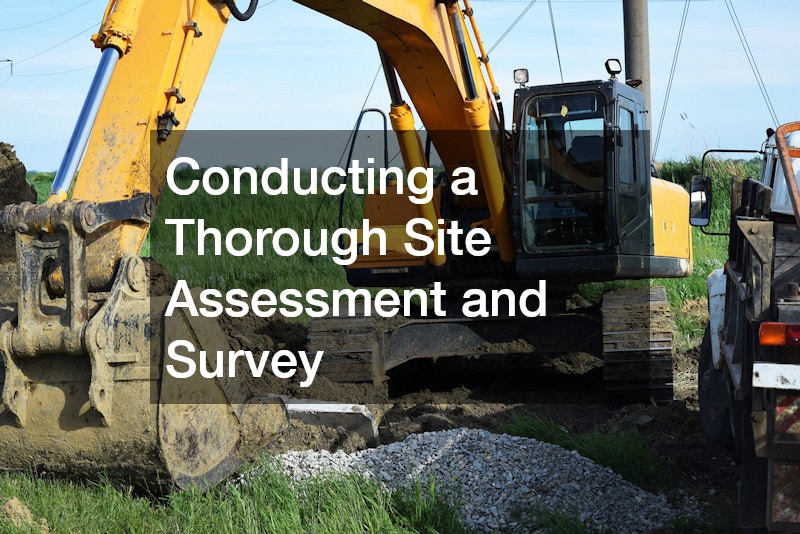
Before a single shovel breaches the earth, you must have a complete, mathematically precise understanding of the land. This phase is purely observational and analytical, relying on experts to document the realities of the physical space. Failing to properly assess the site can lead to boundary disputes that tie up projects in litigation for years.
Map Out Boundaries and Topography Accurately
The absolute first step is hiring a professional, licensed land surveyor. A surveyor will review historical property deeds and physically mark the exact, legal property lines. It is surprisingly common for old fences or natural tree lines to misrepresent the actual property boundaries. Building even a fraction of an inch over a property line can result in mandatory demolition orders and severe financial penalties.
Beyond simply finding the edges of the property, you need a comprehensive topographic survey. This maps the continuous elevation of the land, detailing the peaks, valleys, existing structures, and natural features.
-
Contour Lines: Topographic maps use contour lines to represent elevation changes. Close lines indicate steep drops, while widely spaced lines indicate relatively flat terrain.
-
Grading Strategy: Understanding these elevations allows engineers to calculate exactly how much dirt needs to be removed (cut) or brought in (fill) to create a level building pad.
-
Design Integration: Architects use topographic data to design structures that work harmoniously with the landscape, potentially utilizing natural slopes for walk-out basements or tiered landscaping.
Identify Existing Underground Hazards Before Digging
What lies beneath the surface is often more hazardous than what is visible on top. Striking an underground utility line is dangerous, expensive, and completely preventable.
In most regions, a legal requirement exists to contact a centralized utility notification center (such as the 811 service in the United States) days before digging begins. These services contact local utility providers, who dispatch technicians to mark the location of public lines using standardized color-coded paint and flags (e.g., red for electrical, yellow for gas, blue for water).
However, public utility locators typically only mark lines up to the meter. For private lines—such as old septic systems, private water wells, or electrical lines running to outbuildings—you will need to hire a private utility locating service. These specialists use ground-penetrating radar and electromagnetic locators to find hidden anomalies. Experienced construction contractors rely heavily on these initial, highly accurate surveys to create realistic project timelines, establish rigid safety protocols for their crews, and avoid costly damage to municipal infrastructure.
Clearing and Grubbing the Terrain Safely
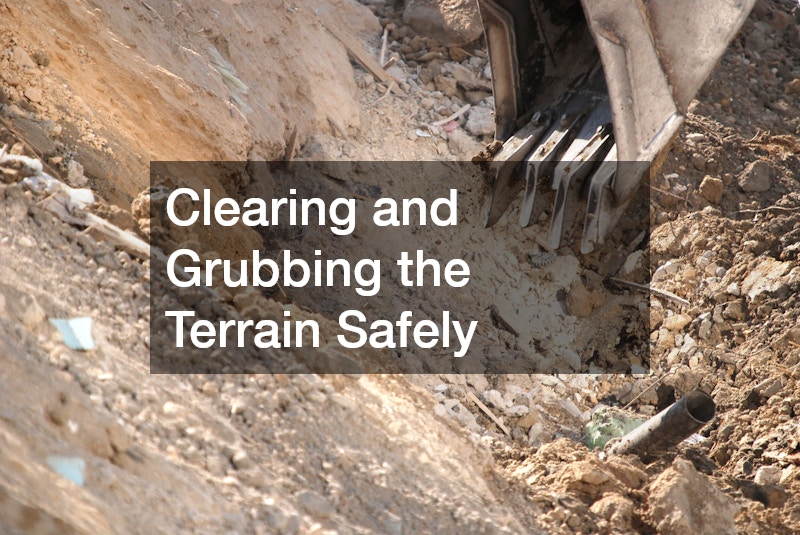
Once the site is surveyed and marked, the physical transformation begins. The clearing and grubbing phase involves stripping the land of obstacles so that the actual earthmoving and grading can take place. This must be done methodically to preserve usable soil and protect surrounding ecosystems.
Remove Vegetation, Boulders, and Debris Systematically
Clearing refers to the removal of surface vegetation, such as trees, brush, and weeds, as well as any surface debris, old foundations, or large boulders. Grubbing goes a step further, dealing with the root systems, tree stumps, and buried obstacles that would eventually decay and cause the soil to collapse if left underground.
A systematic approach to clearing and grubbing includes:
-
Topsoil Stripping: The topmost layer of soil is rich in organic matter and vital for future landscaping. Instead of hauling it away as waste, it should be carefully stripped and stockpiled in a designated area of the site, protected from erosion, to be reused at the end of the project.
-
Stump Removal: Tree stumps cannot simply be cut flush with the ground. They must be completely uprooted using bulldozers or heavy-duty stump grinders to ensure the soil matrix remains stable.
-
Debris Sorting: Modern site preparation emphasizes environmental responsibility. Debris should be sorted on-site. Timber can often be sold or chipped into mulch, rocks can be crushed for aggregate, and metals from old structures should be recycled.
-
Environmental Protections: Before clearing begins, workers must establish protected zones around trees that are slated to remain, ensuring heavy machinery does not compact the root zones or damage the trunks.
Assess Heavy Machinery Needs vs. Outsourcing
The scale of the clearing process dictates the equipment required. For a small, relatively flat lot with minimal brush, a skilled team might manage the clearing efficiently by securing excavator rentals for a few days to handle the heavy lifting. This approach works well for teams that already have experienced, licensed machinery operators on their payroll and are dealing with straightforward, predictable terrain.
Conversely, attempting to clear heavily wooded lots, steep inclines, or sites littered with massive subterranean boulders is a different entirely. These scenarios carry high risks of equipment rollover, falling timber, and hidden hazards. In these complex situations, it is universally safer, faster, and more cost-effective to bring in local excavation contractors who specialize in heavy clearing. These professionals carry the appropriate liability insurance, own specialized forestry attachments (like mulching heads and tree shears), and bring a level of expertise that prevents costly accidents and delays.
Performing Soil Testing and Geotechnical Analysis

You cannot build a stable structure if you do not understand the physical properties of the earth supporting it. Soil testing, performed by a geotechnical engineer, is a critical phase that informs the structural design of the foundation and dictates the required earthwork methods.
Analyze Soil Composition for Load-Bearing Capacity
Soil is not a uniform material; it is a complex mixture of minerals, organic matter, water, and air. The composition of the soil directly impacts its load-bearing capacity—the maximum weight it can support without failing or settling excessively.
Geotechnical engineers classify soil into several primary categories, each with distinct behavioral traits:
-
Clay: Composed of microscopic particles, clay is highly expansive. It swells dramatically when wet and shrinks and cracks when dry. Building on clay requires specialized foundation designs, such as deep piers or post-tensioned slabs, to mitigate this constant shifting.
-
Sand and Gravel: These granular soils have excellent drainage properties and are generally very stable under a load, making them ideal for supporting foundations. However, they lack cohesion and require specific sloping techniques to prevent trench cave-ins.
-
Silt: Silt falls between sand and clay in particle size. It retains moisture easily and is prone to frost heaving in cold climates, making it a challenging base for construction.
-
Peat and Organic Soils: These are dark, spongy soils made of decaying plant matter. They are highly compressible and have almost zero load-bearing capacity. If organic soil is discovered, it must usually be entirely excavated and replaced with stable, engineered fill dirt.
Address Compaction and Settling Issues Early
Once the soil composition is understood, the site must be prepared to handle the immense weight of the incoming structure. This is achieved through soil compaction, a process that mechanically forces soil particles closer together, expelling air and water from the voids. Proper compaction increases the soil’s density, shear strength, and load-bearing capacity while drastically reducing future settlement.
If soil is not adequately compacted, the building will settle unevenly over time. This differential settlement causes foundation cracks, sticking doors and windows, and severe structural damage.
To determine the exact compaction requirements, engineers perform a Proctor compaction test in a laboratory to find the soil’s optimum moisture content—the specific level of dampness at which the soil can achieve its maximum density. On the job site, crews use sheepsfoot rollers for cohesive soils like clay, and smooth-drum vibratory rollers for granular soils like sand. To facilitate this testing phase accurately, geotechnical engineers often require professional excavating services to dig deep, strategically placed test pits across the property, allowing them to physically sample and analyze the undisturbed subsurface soil layers before finalizing the foundation engineering plans.
Executing Precision Trenching and Earthmoving
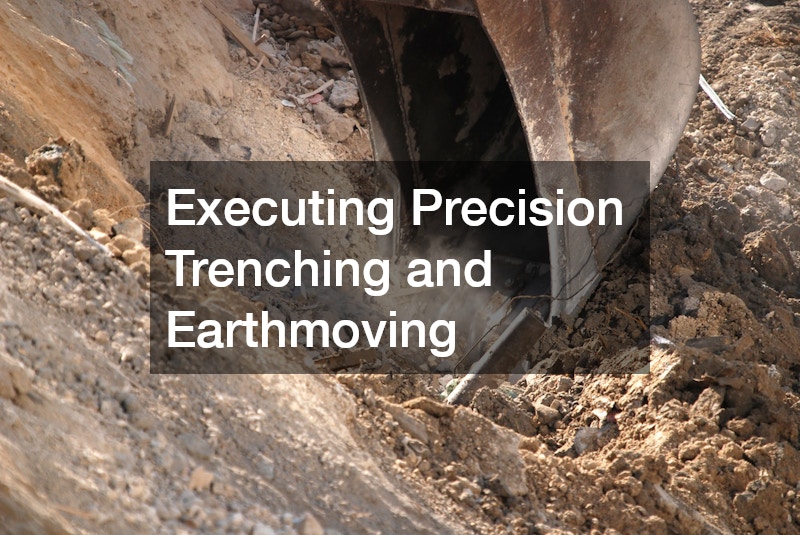
With the site cleared and the soil analyzed, the heavy earthmoving begins. This phase sculpts the raw land into the specific contours required by the architectural plans, creating level building pads, terraced slopes, and the necessary trenches for foundational footings and underground utilities.
Match Your Earthmoving Technique to the Terrain Type
Earthmoving is essentially the process of cutting (removing dirt from high areas) and filling (adding dirt to low areas). The goal is to achieve the precise elevations outlined in the grading plan while minimizing the amount of soil that needs to be imported to or exported from the site, as hauling dirt is incredibly expensive.
Achieving this requires a deep understanding of the terrain and the application of specific earthmoving techniques:
-
Bulk Excavation: Used for creating basements or large underground parking structures. It involves moving massive volumes of earth quickly using large tracked dozers and articulated dump trucks.
-
Trenching: The precision digging of narrow, deep channels for utility lines (water, sewer, gas) and continuous foundation footings. Trenching is highly dangerous due to the risk of cave-ins, and OSHA regulations mandate strict shoring, shielding, or sloping techniques for any trench deeper than five feet.
-
Rough Grading: The initial shaping of the land to approximate the final design, directing water flow and establishing the general building pad elevation.
Because different terrains require vastly different approaches—moving blasted rock is entirely different from moving wet clay—it is critical to vet and hire reliable excavation companies that own and operate the specific, specialized machinery required for your lot’s unique geological profile. Attempting to use a standard backhoe on a site that requires a heavy-duty crawler dozer with a ripper attachment will only result in broken equipment and blown deadlines.
Utilize Non-Destructive Digging for Sensitive Areas
While traditional heavy machinery is necessary for moving vast amounts of earth, it is a blunt instrument. When working in urban environments, industrial sites, or areas crowded with existing, fragile underground infrastructure, traditional mechanical digging poses an unacceptable risk. Striking a high-voltage electrical line or a pressurized fiber-optic bundle can cause fatal accidents and millions of dollars in damages.
To mitigate this risk, project managers should look into the benefits of hydro excavation for sensitive areas. This non-destructive digging technique uses highly pressurized water to safely slice through the soil, instantly turning it into a slurry. A powerful vacuum system simultaneously sucks the muddy slurry into a debris tank mounted on a truck. This method safely exposes buried pipes, delicate cables, and tree roots without causing them any physical harm, providing a surgical level of precision that traditional metal buckets simply cannot achieve.
Designing Effective Drainage and Erosion Control Systems
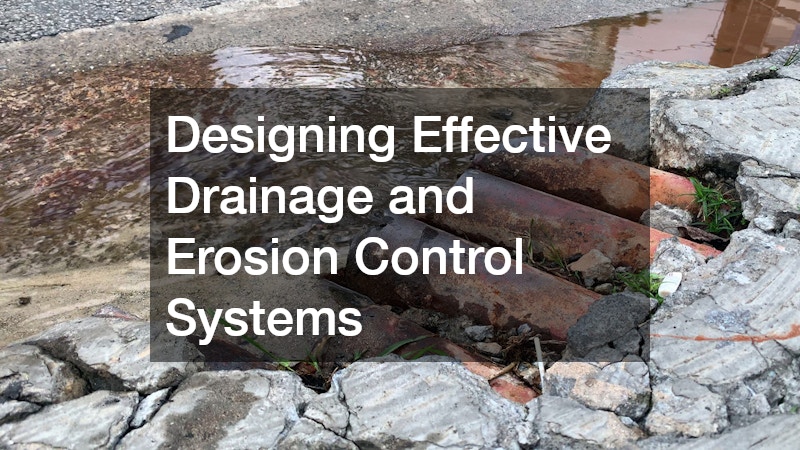
Water is the single greatest enemy of a construction site. Without a comprehensive strategy to manage rainfall, stormwater runoff, and groundwater, a site can quickly turn into an unworkable quagmire. Furthermore, failing to control erosion can result in severe environmental fines and damage to neighboring properties.
Install Perimeter Silt Fencing and Stormwater Basins
The moment the earth is disturbed and the natural vegetation is removed, the soil becomes highly susceptible to erosion from wind and rain. Construction sites are legally obligated to implement a Stormwater Pollution Prevention Plan (SWPPP) to ensure that sediment-laden runoff does not contaminate local storm drains, rivers, or streams.
Key erosion and sediment control measures include:
-
Silt Fencing: These are temporary, permeable fabric barriers installed along the downhill perimeter of the site. They act as a filter, allowing water to pass through while trapping displaced soil and sediment. Silt fences must be trenched into the ground to prevent water from simply flowing underneath them.
-
Stormwater Retention Basins: For larger sites, temporary or permanent basins are excavated to capture and hold large volumes of stormwater runoff. These basins allow suspended dirt and pollutants to settle to the bottom before the clean water is slowly released into the municipal drainage system or absorbed back into the water table.
-
Fiber Rolls (Wattles): These are tubular products filled with straw, flax, or compost, placed horizontally across slopes to slow the velocity of water running down the hill, thereby reducing its erosive power.
-
Temporary Seeding: If a portion of the site is going to sit idle for a prolonged period, it should be temporarily seeded with fast-growing grasses to hold the topsoil in place.
Grade the Land to Direct Water Away from the Build Area
Controlling erosion is only half the battle; you must also manage the flow of water to protect the structural integrity of the new building. The fundamental rule of site drainage is “positive drainage”—the earth must be intentionally shaped to carry water away from the foundation.
If water is allowed to pool around the base of a building, it will eventually seep into the basement, weaken the compacted soil supporting the footings, and cause the foundation to heave or crack. Standard building practices dictate that the ground should slope away from the foundation at a minimum drop of six inches over the first ten feet.
Achieving this precise slope requires skill and experience. There is immense value in consulting a local excavating contractor who intimately understands the regional weather patterns, the area’s specific flood zones, and the strict municipal stormwater runoff laws. When sourcing bids for the project, it is vital to know exactly what questions to ask an excavating company to ensure they will legally guarantee their final grading work against future pooling water, protecting your investment long after the heavy machinery has left the property.
Establishing Safe Access Roads and Temporary Utilities
A construction site is a bustling hub of constant activity. Dozens of workers, inspectors, and delivery drivers need to enter and exit the property safely every single day. If the site is inaccessible or lacks basic infrastructure, productivity will grind to an agonizing halt. Establishing robust access and temporary utilities is the final crucial step in site preparation.
Lay Down Stable Aggregate for Heavy Traffic
Before massive cement mixers, flatbed trucks carrying lumber, and heavy cranes can navigate the property, a stable access road must be established. If delivery trucks attempt to drive over raw, uncompacted dirt—especially after rain—they will inevitably sink to their axles in mud. Pulling stuck trucks out of the mud destroys the site’s grading, delays deliveries, and ruins the project schedule.
To build a temporary construction entrance and access road:
-
Excavate the Path: Cut a shallow path along the designated entry route, removing the soft topsoil.
-
Lay Geotextile Fabric: Roll out a heavy-duty, woven geotextile fabric over the excavated dirt. This fabric acts as a vital separator, preventing the heavy stone from sinking into and mixing with the soft subgrade below.
-
Apply Coarse Aggregate: Spread a thick layer of large, coarse crushed stone (often 2-inch to 3-inch rocks) over the fabric. This rough surface provides immense traction and bears the weight of fully loaded commercial vehicles.
-
Install a Tracking Pad: The first 50 to 100 feet of the entrance must act as a tracking pad, designed to physically shake and scrub the mud off the tires of trucks leaving the site, preventing them from tracking dangerous dirt onto public roadways.
Coordinating this stabilization step early with your local excavating company ensures that heavy material deliveries aren’t delayed during the crucial early weeks of framing and concrete pouring, keeping the entire project aggressively on schedule.
Set Up Power, Water, and Site Security Early
A modern construction site cannot function without reliable power and water, nor can it be left vulnerable to theft and vandalism during off-hours. Setting up these temporary utilities and security measures is the final bow on a properly prepared site.
-
Temporary Power: Before the municipal power grid is permanently connected to the new structure, the site needs electricity to run power tools, charge equipment batteries, and operate office trailers. This is usually achieved by having the utility company drop a temporary power pole with a weather-proof breaker box on the edge of the property.
-
Water Supply: Water is essential for mixing mortar, cleaning tools, and, crucially, for dust control. Heavy equipment moving over dry dirt creates massive dust clouds that pose a respiratory hazard and violate environmental regulations. A temporary water meter tapped into the city line or a dedicated water truck must be secured early.
-
Site Security: Construction sites are prime targets for the theft of copper wire, expensive lumber, and heavy machinery. Perimeter chain-link fencing, often wrapped in privacy fabric, is mandatory in most municipalities to keep out unauthorized personnel and protect the public from open trenches.
For many developers, utilizing reliable construction equipment services to rent towable light towers, mobile generators, temporary fencing, and even solar-powered security cameras is the most efficient way to keep the site safe, compliant, and operational long after the sun goes down.
Conclusion
The success of any construction endeavor is irrevocably tied to the quality of the groundwork beneath it. Taking a raw piece of land and transforming it into a secure, highly controlled environment ready for building is a complex, multi-disciplinary undertaking. From the mathematical precision of the initial topographical surveys to the brute force of clearing timber, every single phase requires meticulous planning and expert execution.
By prioritizing comprehensive soil testing, investing in precision earthmoving, and designing robust drainage and access systems, you are doing much more than just preparing a lot. You are actively mitigating risk. You are protecting your workforce, shielding your budget from unforeseen subterranean surprises, and ensuring that the final structure will stand solid and true for generations to come.
The ultimate takeaway is that site preparation is never the place to cut corners or accelerate timelines artificially. The time, capital, and effort invested into the dirt before the foundation is poured will pay massive dividends by preventing structural disasters years down the line. As you look toward your next development, begin mapping out your site preparation checklist months in advance of your target ground-breaking date to ensure your project starts on solid ground.
A building is truly only as strong as the ground it stands on. In the world of commercial and residential development, there is a temptation to rush toward the visible milestones—pouring the concrete, framing the walls, and raising the roof. However, skipping or rushing through the crucial preliminary steps of site preparation is consistently the leading cause of massive budget overruns, frustrating timeline delays, and catastrophic structural failures down the line. When a foundation cracks because the earth beneath it was improperly compacted, or when an entire project is halted due to a ruptured underground utility line, the true cost of poor preparation becomes painfully clear.
Proper groundwork goes far beyond simply moving dirt from one side of a lot to another. It is a highly calculated, multi-phase process that ensures safety, strict regulatory compliance, and a smooth, uninterrupted workflow for the remainder of the project. A well-prepared site mitigates environmental impact, protects the surrounding community, and creates a highly organized canvas for the builders.
This comprehensive guide will walk you through the essential phases of preparing a site for building. We will cover everything from the initial boundary mapping and meticulous soil testing to the heavy lifting of earthmoving, establishing secure access roads, and implementing necessary drainage systems. Whether you are developing a sprawling commercial complex or a single-family home, the principles outlined here will provide a solid, reliable foundation for your next project.
Conducting a Thorough Site Assessment and Survey
Before a single shovel breaches the earth, you must have a complete, mathematically precise understanding of the land. This phase is purely observational and analytical, relying on experts to document the realities of the physical space. Failing to properly assess the site can lead to boundary disputes that tie up projects in litigation for years.
Map Out Boundaries and Topography Accurately
The absolute first step is hiring a professional, licensed land surveyor. A surveyor will review historical property deeds and physically mark the exact, legal property lines. It is surprisingly common for old fences or natural tree lines to misrepresent the actual property boundaries. Building even a fraction of an inch over a property line can result in mandatory demolition orders and severe financial penalties.
Beyond simply finding the edges of the property, you need a comprehensive topographic survey. This maps the continuous elevation of the land, detailing the peaks, valleys, existing structures, and natural features.
-
Contour Lines: Topographic maps use contour lines to represent elevation changes. Close lines indicate steep drops, while widely spaced lines indicate relatively flat terrain.
-
Grading Strategy: Understanding these elevations allows engineers to calculate exactly how much dirt needs to be removed (cut) or brought in (fill) to create a level building pad.
-
Design Integration: Architects use topographic data to design structures that work harmoniously with the landscape, potentially utilizing natural slopes for walk-out basements or tiered landscaping.
Identify Existing Underground Hazards Before Digging
What lies beneath the surface is often more hazardous than what is visible on top. Striking an underground utility line is dangerous, expensive, and completely preventable.
In most regions, a legal requirement exists to contact a centralized utility notification center (such as the 811 service in the United States) days before digging begins. These services contact local utility providers, who dispatch technicians to mark the location of public lines using standardized color-coded paint and flags (e.g., red for electrical, yellow for gas, blue for water).
However, public utility locators typically only mark lines up to the meter. For private lines—such as old septic systems, private water wells, or electrical lines running to outbuildings—you will need to hire a private utility locating service. These specialists use ground-penetrating radar and electromagnetic locators to find hidden anomalies. Experienced construction contractors rely heavily on these initial, highly accurate surveys to create realistic project timelines, establish rigid safety protocols for their crews, and avoid costly damage to municipal infrastructure.
Clearing and Grubbing the Terrain Safely
Once the site is surveyed and marked, the physical transformation begins. The clearing and grubbing phase involves stripping the land of obstacles so that the actual earthmoving and grading can take place. This must be done methodically to preserve usable soil and protect surrounding ecosystems.
Remove Vegetation, Boulders, and Debris Systematically
Clearing refers to the removal of surface vegetation, such as trees, brush, and weeds, as well as any surface debris, old foundations, or large boulders. Grubbing goes a step further, dealing with the root systems, tree stumps, and buried obstacles that would eventually decay and cause the soil to collapse if left underground.
A systematic approach to clearing and grubbing includes:
-
Topsoil Stripping: The topmost layer of soil is rich in organic matter and vital for future landscaping. Instead of hauling it away as waste, it should be carefully stripped and stockpiled in a designated area of the site, protected from erosion, to be reused at the end of the project.
-
Stump Removal: Tree stumps cannot simply be cut flush with the ground. They must be completely uprooted using bulldozers or heavy-duty stump grinders to ensure the soil matrix remains stable.
-
Debris Sorting: Modern site preparation emphasizes environmental responsibility. Debris should be sorted on-site. Timber can often be sold or chipped into mulch, rocks can be crushed for aggregate, and metals from old structures should be recycled.
-
Environmental Protections: Before clearing begins, workers must establish protected zones around trees that are slated to remain, ensuring heavy machinery does not compact the root zones or damage the trunks.
Assess Heavy Machinery Needs vs. Outsourcing
The scale of the clearing process dictates the equipment required. For a small, relatively flat lot with minimal brush, a skilled team might manage the clearing efficiently by securing excavator rentals for a few days to handle the heavy lifting. This approach works well for teams that already have experienced, licensed machinery operators on their payroll and are dealing with straightforward, predictable terrain.
Conversely, attempting to clear heavily wooded lots, steep inclines, or sites littered with massive subterranean boulders is a different entirely. These scenarios carry high risks of equipment rollover, falling timber, and hidden hazards. In these complex situations, it is universally safer, faster, and more cost-effective to bring in local excavation contractors who specialize in heavy clearing. These professionals carry the appropriate liability insurance, own specialized forestry attachments (like mulching heads and tree shears), and bring a level of expertise that prevents costly accidents and delays.
Performing Soil Testing and Geotechnical Analysis
You cannot build a stable structure if you do not understand the physical properties of the earth supporting it. Soil testing, performed by a geotechnical engineer, is a critical phase that informs the structural design of the foundation and dictates the required earthwork methods.
Analyze Soil Composition for Load-Bearing Capacity
Soil is not a uniform material; it is a complex mixture of minerals, organic matter, water, and air. The composition of the soil directly impacts its load-bearing capacity—the maximum weight it can support without failing or settling excessively.
Geotechnical engineers classify soil into several primary categories, each with distinct behavioral traits:
-
Clay: Composed of microscopic particles, clay is highly expansive. It swells dramatically when wet and shrinks and cracks when dry. Building on clay requires specialized foundation designs, such as deep piers or post-tensioned slabs, to mitigate this constant shifting.
-
Sand and Gravel: These granular soils have excellent drainage properties and are generally very stable under a load, making them ideal for supporting foundations. However, they lack cohesion and require specific sloping techniques to prevent trench cave-ins.
-
Silt: Silt falls between sand and clay in particle size. It retains moisture easily and is prone to frost heaving in cold climates, making it a challenging base for construction.
-
Peat and Organic Soils: These are dark, spongy soils made of decaying plant matter. They are highly compressible and have almost zero load-bearing capacity. If organic soil is discovered, it must usually be entirely excavated and replaced with stable, engineered fill dirt.
Address Compaction and Settling Issues Early
Once the soil composition is understood, the site must be prepared to handle the immense weight of the incoming structure. This is achieved through soil compaction, a process that mechanically forces soil particles closer together, expelling air and water from the voids. Proper compaction increases the soil’s density, shear strength, and load-bearing capacity while drastically reducing future settlement.
If soil is not adequately compacted, the building will settle unevenly over time. This differential settlement causes foundation cracks, sticking doors and windows, and severe structural damage.
To determine the exact compaction requirements, engineers perform a Proctor compaction test in a laboratory to find the soil’s optimum moisture content—the specific level of dampness at which the soil can achieve its maximum density. On the job site, crews use sheepsfoot rollers for cohesive soils like clay, and smooth-drum vibratory rollers for granular soils like sand. To facilitate this testing phase accurately, geotechnical engineers often require professional excavating services to dig deep, strategically placed test pits across the property, allowing them to physically sample and analyze the undisturbed subsurface soil layers before finalizing the foundation engineering plans.
Executing Precision Trenching and Earthmoving
With the site cleared and the soil analyzed, the heavy earthmoving begins. This phase sculpts the raw land into the specific contours required by the architectural plans, creating level building pads, terraced slopes, and the necessary trenches for foundational footings and underground utilities.
Match Your Earthmoving Technique to the Terrain Type
Earthmoving is essentially the process of cutting (removing dirt from high areas) and filling (adding dirt to low areas). The goal is to achieve the precise elevations outlined in the grading plan while minimizing the amount of soil that needs to be imported to or exported from the site, as hauling dirt is incredibly expensive.
Achieving this requires a deep understanding of the terrain and the application of specific earthmoving techniques:
-
Bulk Excavation: Used for creating basements or large underground parking structures. It involves moving massive volumes of earth quickly using large tracked dozers and articulated dump trucks.
-
Trenching: The precision digging of narrow, deep channels for utility lines (water, sewer, gas) and continuous foundation footings. Trenching is highly dangerous due to the risk of cave-ins, and OSHA regulations mandate strict shoring, shielding, or sloping techniques for any trench deeper than five feet.
-
Rough Grading: The initial shaping of the land to approximate the final design, directing water flow and establishing the general building pad elevation.
Because different terrains require vastly different approaches—moving blasted rock is entirely different from moving wet clay—it is critical to vet and hire reliable excavation companies that own and operate the specific, specialized machinery required for your lot’s unique geological profile. Attempting to use a standard backhoe on a site that requires a heavy-duty crawler dozer with a ripper attachment will only result in broken equipment and blown deadlines.
Utilize Non-Destructive Digging for Sensitive Areas
While traditional heavy machinery is necessary for moving vast amounts of earth, it is a blunt instrument. When working in urban environments, industrial sites, or areas crowded with existing, fragile underground infrastructure, traditional mechanical digging poses an unacceptable risk. Striking a high-voltage electrical line or a pressurized fiber-optic bundle can cause fatal accidents and millions of dollars in damages.
To mitigate this risk, project managers should look into the benefits of hydro excavation for sensitive areas. This non-destructive digging technique uses highly pressurized water to safely slice through the soil, instantly turning it into a slurry. A powerful vacuum system simultaneously sucks the muddy slurry into a debris tank mounted on a truck. This method safely exposes buried pipes, delicate cables, and tree roots without causing them any physical harm, providing a surgical level of precision that traditional metal buckets simply cannot achieve.
Designing Effective Drainage and Erosion Control Systems
Water is the single greatest enemy of a construction site. Without a comprehensive strategy to manage rainfall, stormwater runoff, and groundwater, a site can quickly turn into an unworkable quagmire. Furthermore, failing to control erosion can result in severe environmental fines and damage to neighboring properties.
Install Perimeter Silt Fencing and Stormwater Basins
The moment the earth is disturbed and the natural vegetation is removed, the soil becomes highly susceptible to erosion from wind and rain. Construction sites are legally obligated to implement a Stormwater Pollution Prevention Plan (SWPPP) to ensure that sediment-laden runoff does not contaminate local storm drains, rivers, or streams.
Key erosion and sediment control measures include:
-
Silt Fencing: These are temporary, permeable fabric barriers installed along the downhill perimeter of the site. They act as a filter, allowing water to pass through while trapping displaced soil and sediment. Silt fences must be trenched into the ground to prevent water from simply flowing underneath them.
-
Stormwater Retention Basins: For larger sites, temporary or permanent basins are excavated to capture and hold large volumes of stormwater runoff. These basins allow suspended dirt and pollutants to settle to the bottom before the clean water is slowly released into the municipal drainage system or absorbed back into the water table.
-
Fiber Rolls (Wattles): These are tubular products filled with straw, flax, or compost, placed horizontally across slopes to slow the velocity of water running down the hill, thereby reducing its erosive power.
-
Temporary Seeding: If a portion of the site is going to sit idle for a prolonged period, it should be temporarily seeded with fast-growing grasses to hold the topsoil in place.
Grade the Land to Direct Water Away from the Build Area
Controlling erosion is only half the battle; you must also manage the flow of water to protect the structural integrity of the new building. The fundamental rule of site drainage is “positive drainage”—the earth must be intentionally shaped to carry water away from the foundation.
If water is allowed to pool around the base of a building, it will eventually seep into the basement, weaken the compacted soil supporting the footings, and cause the foundation to heave or crack. Standard building practices dictate that the ground should slope away from the foundation at a minimum drop of six inches over the first ten feet.
Achieving this precise slope requires skill and experience. There is immense value in consulting a local excavating contractor who intimately understands the regional weather patterns, the area’s specific flood zones, and the strict municipal stormwater runoff laws. When sourcing bids for the project, it is vital to know exactly what questions to ask an excavating company to ensure they will legally guarantee their final grading work against future pooling water, protecting your investment long after the heavy machinery has left the property.
Establishing Safe Access Roads and Temporary Utilities
A construction site is a bustling hub of constant activity. Dozens of workers, inspectors, and delivery drivers need to enter and exit the property safely every single day. If the site is inaccessible or lacks basic infrastructure, productivity will grind to an agonizing halt. Establishing robust access and temporary utilities is the final crucial step in site preparation.
Lay Down Stable Aggregate for Heavy Traffic
Before massive cement mixers, flatbed trucks carrying lumber, and heavy cranes can navigate the property, a stable access road must be established. If delivery trucks attempt to drive over raw, uncompacted dirt—especially after rain—they will inevitably sink to their axles in mud. Pulling stuck trucks out of the mud destroys the site’s grading, delays deliveries, and ruins the project schedule.
To build a temporary construction entrance and access road:
-
Excavate the Path: Cut a shallow path along the designated entry route, removing the soft topsoil.
-
Lay Geotextile Fabric: Roll out a heavy-duty, woven geotextile fabric over the excavated dirt. This fabric acts as a vital separator, preventing the heavy stone from sinking into and mixing with the soft subgrade below.
-
Apply Coarse Aggregate: Spread a thick layer of large, coarse crushed stone (often 2-inch to 3-inch rocks) over the fabric. This rough surface provides immense traction and bears the weight of fully loaded commercial vehicles.
-
Install a Tracking Pad: The first 50 to 100 feet of the entrance must act as a tracking pad, designed to physically shake and scrub the mud off the tires of trucks leaving the site, preventing them from tracking dangerous dirt onto public roadways.
Coordinating this stabilization step early with your local excavating company ensures that heavy material deliveries aren’t delayed during the crucial early weeks of framing and concrete pouring, keeping the entire project aggressively on schedule.
Set Up Power, Water, and Site Security Early
A modern construction site cannot function without reliable power and water, nor can it be left vulnerable to theft and vandalism during off-hours. Setting up these temporary utilities and security measures is the final bow on a properly prepared site.
-
Temporary Power: Before the municipal power grid is permanently connected to the new structure, the site needs electricity to run power tools, charge equipment batteries, and operate office trailers. This is usually achieved by having the utility company drop a temporary power pole with a weather-proof breaker box on the edge of the property.
-
Water Supply: Water is essential for mixing mortar, cleaning tools, and, crucially, for dust control. Heavy equipment moving over dry dirt creates massive dust clouds that pose a respiratory hazard and violate environmental regulations. A temporary water meter tapped into the city line or a dedicated water truck must be secured early.
-
Site Security: Construction sites are prime targets for the theft of copper wire, expensive lumber, and heavy machinery. Perimeter chain-link fencing, often wrapped in privacy fabric, is mandatory in most municipalities to keep out unauthorized personnel and protect the public from open trenches.
For many developers, utilizing reliable construction equipment services to rent towable light towers, mobile generators, temporary fencing, and even solar-powered security cameras is the most efficient way to keep the site safe, compliant, and operational long after the sun goes down.
Conclusion
The success of any construction endeavor is irrevocably tied to the quality of the groundwork beneath it. Taking a raw piece of land and transforming it into a secure, highly controlled environment ready for building is a complex, multi-disciplinary undertaking. From the mathematical precision of the initial topographical surveys to the brute force of clearing timber, every single phase requires meticulous planning and expert execution.
By prioritizing comprehensive soil testing, investing in precision earthmoving, and designing robust drainage and access systems, you are doing much more than just preparing a lot. You are actively mitigating risk. You are protecting your workforce, shielding your budget from unforeseen subterranean surprises, and ensuring that the final structure will stand solid and true for generations to come.
The ultimate takeaway is that site preparation is never the place to cut corners or accelerate timelines artificially. The time, capital, and effort invested into the dirt before the foundation is poured will pay massive dividends by preventing structural disasters years down the line. As you look toward your next development, begin mapping out your site preparation checklist months in advance of your target ground-breaking date to ensure your project starts on solid ground.