
Key Takeaways:
- Productivity now includes quality, efficiency, flexibility, and resource use—not just output.
- Many factors are interconnected, so one weak area can affect the whole system.
- Metrics like OEE, cycle time, and defect rate help identify inefficiencies.
- Lean practices reduce waste and improve output without extra resources.
- Technology improves efficiency through automation, AI, and real-time data.
- Skilled, well-trained workers directly boost productivity and consistency.
- Long-term gains require continuous improvement and strategic planning.
Improving productivity in manufacturing is no longer just about producing more units in less time. Modern manufacturing demands efficiency, flexibility, quality control, and smart decision-making all working together. Whether you’re running a small production line or managing a large industrial plant, productivity impacts profitability, customer satisfaction, and long-term sustainability.
This guide breaks down practical, real-world strategies you can use to improve output, reduce waste, and streamline operations across every part of your manufacturing system.
What Does Productivity Mean in Manufacturing Today?
Productivity in manufacturing refers to how efficiently inputs such as labor, materials, time, and equipment are transformed into finished goods. Traditionally, this was measured simply by output volume, but modern manufacturing has evolved far beyond that narrow definition.
Today, productivity is more holistic. It reflects how well a system performs across quality, speed, consistency, and resource utilization—not just how many units are produced.
Modern productivity now includes:
- Consistency in product quality: Producing uniform goods with minimal variation or defects
- Speed of production without sacrificing standards: Maintaining output rates without compromising safety or quality
- Reduced downtime and operational delays: Keeping machines and workflows running smoothly with minimal interruptions
- Efficient use of energy and raw materials: Minimizing waste and optimizing resource consumption
- Adaptability to changing demand: Scaling production up or down based on market needs
In practice, productivity is about achieving more output with fewer resources while maintaining strict control over cost and quality. It is no longer just a factory-floor metric—it is a reflection of how well an entire operation is designed and managed.
Manufacturers today also factor in digital integration, automation, and workforce engagement. Productivity is increasingly influenced by how well people, machines, and data systems work together rather than operating in isolation.
Why Manufacturing Productivity Matters More Than Ever
Global competition has fundamentally changed manufacturing. Companies are no longer competing only within local or regional markets—they are competing against global supply chains that are faster, more efficient, and heavily automated. This shift means that even small inefficiencies can have a significant impact on competitiveness.
Higher productivity directly leads to:
- Lower production costs per unit
- Faster order fulfillment and delivery times
- Improved customer satisfaction and retention
- Higher profit margins through reduced waste
- Better scalability for business growth
On the other hand, low productivity creates serious operational challenges, including:
- Production bottlenecks that slow down output
- Excess or obsolete inventory tying up capital
- Missed delivery deadlines and customer dissatisfaction
- Increased operational waste and inefficiency
- Higher dependency on overtime or emergency fixes
Today, improving productivity is not just about optimizing operations—it is essential for staying competitive and financially sustainable in the long run.
What Are the Biggest Factors Affecting Productivity?
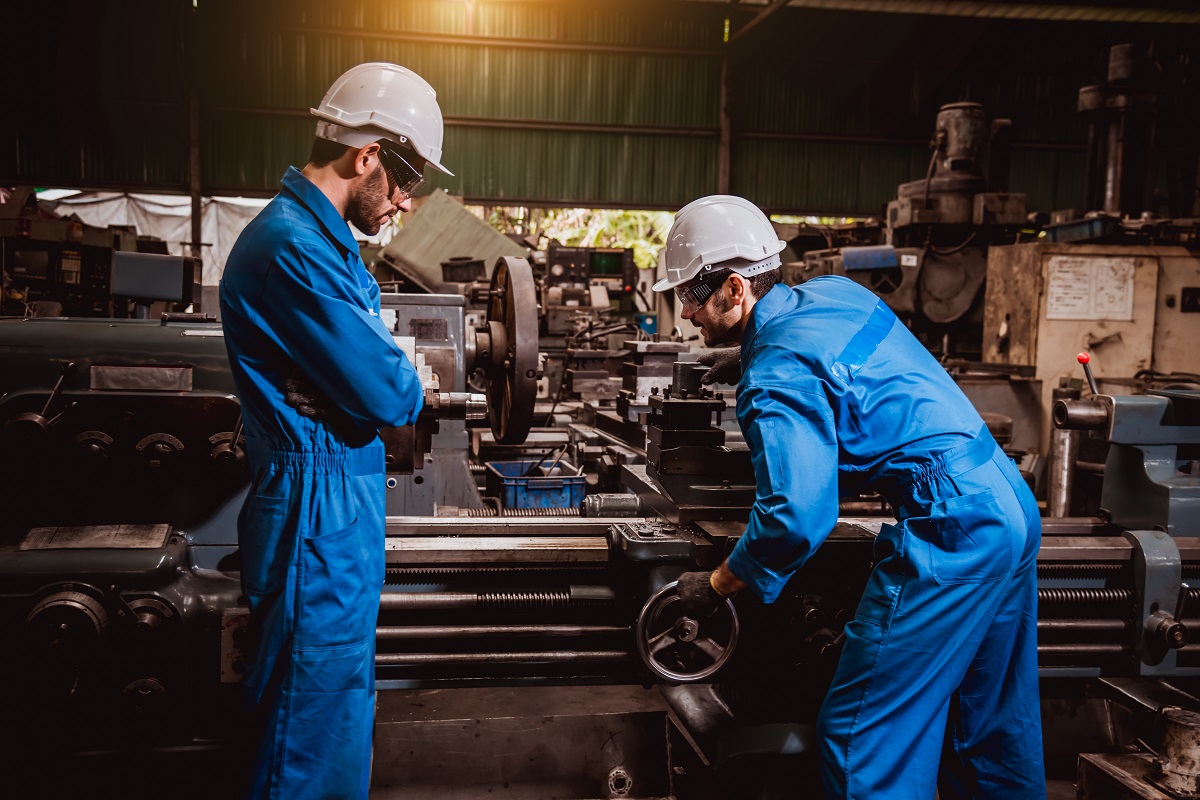
Manufacturing productivity is shaped by multiple interconnected variables. These factors often overlap, meaning a weakness in one area can affect the entire production system.
Key factors include:
- Equipment efficiency and downtime: Machine reliability and maintenance frequency
- Workforce skill level and training: Operator competency and adaptability
- Production planning and scheduling: How well work is organized and sequenced
- Supply chain reliability: Timeliness and consistency of raw material delivery
- Factory layout and workflow design: Physical organization of production processes
- Maintenance practices: Preventive and predictive upkeep of machinery
- Technology adoption: Use of automation, data systems, and smart tools
Even minor inefficiencies can create cascading effects. For example, a delayed material shipment can stop production lines, idle skilled workers, and disrupt downstream processes. Because these factors are interconnected, improving productivity usually requires a systems-level approach rather than isolated fixes.
How to Measure Productivity in Manufacturing
You cannot improve productivity effectively without measuring it. In manufacturing, productivity tracking relies on both operational and financial metrics that reflect real performance.
Common measurement indicators include:
- Output per labor hour: Measures how many units each worker produces in a given time
- Overall Equipment Effectiveness (OEE): Combines availability, performance, and quality into a single efficiency score
- Cycle time: The total time required to complete one production cycle from start to finish
- Throughput rate: The number of units produced within a specific time period
- Defect rate: Percentage of products that fail to meet quality standards
Tracking these metrics consistently helps managers identify weak points in production and prioritize improvements.
A useful benchmarking method is comparing actual output against maximum theoretical capacity. The difference between the two highlights hidden inefficiencies such as delays, downtime, or quality losses that may not be immediately visible on the factory floor.
How Can Lean Manufacturing Improve Efficiency?
Lean manufacturing is a systematic approach focused on maximizing value while minimizing waste. Instead of simply increasing output, it focuses on improving how efficiently work is performed.
Core principles include:
- Identifying and eliminating non-value-added activities
- Continuous improvement (Kaizen) across all processes
- Just-in-time production to reduce excess inventory
- Standardized workflows for consistency and efficiency
- Streamlined material and information flow
Lean systems target common manufacturing waste such as:
- Overproduction beyond actual demand
- Waiting time caused by delays or imbalances
- Unnecessary movement of workers or materials
- Defects that require rework or scrap
- Excess inventory that ties up capital
By systematically removing these inefficiencies, companies can improve output without increasing resources or operational costs.
What Role Does Technology Play in Modern Manufacturing?
Technology has become one of the strongest drivers of productivity improvement in modern manufacturing environments. It enables better visibility, automation, and decision-making across all production stages.
Key technologies include:
- Industrial automation and robotics for repetitive tasks
- IoT sensors for real-time machine monitoring
- Artificial intelligence for forecasting and optimization
- Cloud-based production management systems
- Digital twins for simulation and process testing
Automation reduces reliance on manual labor for repetitive or physically demanding tasks, while improving consistency and speed.
AI-driven systems further enhance productivity by identifying patterns in production data, optimizing schedules, and reducing downtime through predictive maintenance alerts. This allows manufacturers to move from reactive operations to proactive, data-informed decision-making.
How Can Workforce Training Improve Output?
Even the most advanced manufacturing systems are limited by the skill level of the people operating them. Workforce capability directly impacts efficiency, safety, and quality.
Effective training programs typically focus on:
- Proper machine operation and safety procedures
- Standardized production processes
- Problem-solving and troubleshooting skills
- Quality control and inspection methods
- Effective use of modern manufacturing technologies
Cross-training is particularly valuable because it allows employees to perform multiple roles. This improves operational flexibility and reduces disruption when staffing changes or absences occur.
A well-trained workforce also tends to:
- Make fewer production errors
- Work more efficiently under pressure
- Adapt more quickly to process changes
- Contribute to continuous improvement initiatives
- Maintain higher engagement and morale
How Does Equipment Maintenance Impact Productivity?
Equipment reliability is one of the most important factors influencing manufacturing productivity. Machine failures can bring entire production lines to a halt, resulting in costly downtime.
Maintenance strategies generally fall into three categories:
- Reactive maintenance: Repairs performed after a breakdown occurs
- Preventive maintenance: Scheduled servicing to reduce failure risk
- Predictive maintenance: Data-driven monitoring to anticipate issues before they happen
Predictive maintenance is increasingly preferred due to advancements in sensors and real-time analytics.
Benefits of strong maintenance practices include:
- Reduced unexpected downtime
- Extended equipment lifespan
- Lower long-term repair and replacement costs
- More stable and predictable production schedules
Poor maintenance practices, on the other hand, often lead to sudden breakdowns, production delays, and cascading operational disruptions.
How Do Factory Layout and Workflow Design Matter?
Factory layout plays a major role in determining how efficiently materials and people move through production processes. Poor layout design often results in wasted motion, delays, and unnecessary handling.
An optimized factory layout typically ensures:
- Smooth and logical material flow between stages
- Reduced transportation time within the facility
- Clear separation of production zones
- Easy access to tools, materials, and equipment
Common layout types include product-based, process-based, and cellular designs, each suited to different production needs. Even small layout improvements can significantly increase efficiency by reducing unnecessary movement and minimizing time lost between production stages.
How Can Inventory Management Improve Efficiency?
Inventory management is a critical but often underestimated factor in manufacturing productivity. Poor inventory control can either slow production or unnecessarily tie up capital.
Effective strategies include:
- Just-in-time inventory systems to reduce excess stock
- Automated tracking systems for real-time visibility
- Demand forecasting to align supply with production needs
- Supplier coordination for consistent material flow
- Safety stock optimization to prevent shortages
Balanced inventory ensures that production lines have what they need when they need it, without creating storage inefficiencies or financial strain.
What Are the Best Ways to Reduce Manufacturing Waste?
Waste reduction is central to improving manufacturing productivity. In this context, waste goes beyond physical scrap and includes time, energy, and inefficient processes.
Common strategies include:
- Streamlining production steps to remove unnecessary actions
- Reducing machine idle time through better scheduling
- Strengthening quality control to minimize defects
- Reusing or recycling materials where possible
- Standardizing processes across shifts and teams
Process mapping is a particularly effective technique for identifying hidden inefficiencies and redundant steps in production workflows. Reducing waste improves efficiency directly, often without requiring additional investment in equipment or labor.
How Do Data and Analytics Improve Decision-Making?

Data-driven manufacturing allows organizations to move away from guesswork and toward evidence-based decision-making.
Key advantages include:
- Identifying production bottlenecks in real time
- Monitoring performance across shifts and machines
- Improving demand forecasting accuracy
- Optimizing supply chain and inventory decisions
- Enhancing quality control through pattern detection
Dashboards and reporting tools make complex production data easier to understand and act on quickly. As data collection improves, manufacturers gain deeper insights into performance trends, allowing for continuous optimization of operations.
How Can Leadership Improve Factory Productivity?
Strong leadership is often the foundation of a highly productive manufacturing environment. Leaders influence not only strategy but also culture, communication, and execution.
Effective manufacturing leadership typically focuses on:
- Clear communication of performance goals and expectations
- Building accountability across teams and departments
- Supporting continuous training and skill development
- Encouraging innovation and process improvement
- Removing operational bottlenecks and inefficiencies
Leadership also plays a critical role in aligning departments so that production, maintenance, supply chain, and quality control work toward shared objectives rather than operating in isolation.
How Should You Approach Expansion and Facility Upgrades?
As manufacturing operations grow, expansion becomes a critical part of maintaining productivity. However, scaling too quickly or without proper planning can introduce inefficiencies that reduce output instead of improving it.
Before expanding, manufacturers should evaluate whether current systems are truly optimized. Adding more space, machines, or labor without fixing existing bottlenecks often leads to higher costs without proportional gains in productivity.
Key considerations during expansion include:
- Whether current production processes are running at peak efficiency
- If existing equipment is being fully utilized
- How additional space will affect workflow and material movement
- Whether staffing levels match production demand
- How new systems will integrate with existing operations
Expansion should always be treated as a strategic decision, not just a physical one. The planning stage is especially important because the steps to build a new commercial facility directly affect long-term productivity and efficiency. This shapes how smoothly the entire operation will function once scaling begins.
A well-planned expansion can significantly boost productivity by:
- Increasing production capacity without increasing waste
- Improving layout efficiency and material flow
- Allowing for newer, faster technologies to be integrated
- Reducing strain on existing equipment and staff
When done correctly, expansion doesn’t just increase size—it improves how efficiently the entire system operates.
What Are Common Mistakes That Reduce Productivity?
Even well-run factories can fall into productivity traps. Common mistakes include:
- Ignoring small inefficiencies until they grow
- Poor communication between departments
- Overcomplicating workflows
- Delaying equipment maintenance
- Failing to train employees properly
- Relying on outdated systems
Avoiding these mistakes requires consistent monitoring and a willingness to adapt processes when needed.
In Summary
Manufacturing productivity depends on a combination of systems, people, technology, and strategy working together. There is no single solution, but rather a set of interconnected improvements that build on each other over time.
By focusing on efficiency, reducing waste, investing in technology, and strengthening workforce capability, manufacturers can create more resilient and competitive operations that perform better in any market condition.