Growing a business is exciting, but the moment you add new locations, move facilities, or scale up operations, you also multiply your risks. Leaders suddenly find themselves juggling construction decisions, employee safety, legal exposure, and logistics all at once, often without a clear playbook. Making informed choices at each stage can mean the difference between a smooth transition and a costly setback.
This guide walks through the practical realities of expansion, relocation, and liability management so you can lead your team with confidence.
Planning Your Facility Expansion Timeline
Expanding into a new facility or adding square footage to an existing one requires a realistic timeline that accounts for permitting, construction delays, and staffing transitions. Many leaders underestimate how long municipal approvals take, which pushes back every other milestone that depends on occupancy. Building in buffer time for inspections and unexpected delays protects your budget and your team’s morale. A phased approach, where departments move in waves rather than all at once, also reduces operational disruption.
- Start permitting conversations at least six months before your target move date
- Identify which departments can operate remotely during construction
- Build a two- to four-week buffer into every major construction milestone
- Communicate timeline changes to staff as soon as they happen, not after
Choosing Durable Materials for New Construction

When you are putting up a new building or renovating an existing one, material choices affect both safety and long-term maintenance costs. Every decision made during this phase gets locked into the structure for decades, so cutting corners to save a few dollars upfront often costs far more once the building is occupied and operational. Roof metal decking has become a popular choice for commercial expansions because it offers strong load-bearing support while speeding up installation compared to traditional framing. Steel decking panels can often be installed in a fraction of the time wood or concrete systems require, which shortens project timelines and reduces labor exposure on the job site. It also resists fire, pests, and moisture-related warping far better than many traditional materials, which matters if your expansion includes warehouse space, manufacturing floors, or storage areas with strict insurance requirements.
Choosing the right decking profile also impacts how well the structure handles snow loads, wind uplift, and future equipment mounting needs. A deeper rib profile, for instance, typically spans longer distances between supports, which can reduce the number of structural beams needed and lower overall material costs. Gauge thickness matters too — thinner gauges save money initially but may not hold up under heavy rooftop HVAC units, solar panel arrays, or regional weather extremes like hail or high wind zones. Working with contractors who understand local building codes ensures the material selection meets both safety standards and your budget. They can also help you weigh trade-offs, such as whether galvanized or painted finishes make more sense given your climate and expected building lifespan. Getting this right the first time prevents costly retrofits down the road and keeps your expansion on schedule rather than stalled by failed inspections.
Beyond the roof, flooring and structural components deserve the same scrutiny. Facilities that will house heavy machinery or high foot traffic need materials rated for that specific use, not just whatever is cheapest at the time. A warehouse floor supporting forklifts and pallet racking, for example, typically needs a concrete slab with a compressive strength of at least 4,000 PSI, reinforced appropriately for point loads, rather than a standard 3,000 PSI mix suited for light commercial use. Structural steel and support beams should be specified with the facility’s actual future load in mind, not just its day-one requirements. If expansion plans include a mezzanine, additional equipment, or a second production line within five years, it’s far cheaper to oversize the structure now than to reinforce it later while operations are running. Retrofitting load-bearing elements after the fact often means halting production, which costs far more than the incremental material upgrade would have.
Wall and ceiling materials matter too, particularly in spaces exposed to moisture, chemicals, or temperature swings. Fiber-cement board or treated metal panels hold up far longer than standard drywall in industrial or high-humidity environments, and they resist the mold and warping that lead to costly repairs. Getting this right the first time avoids expensive retrofits down the road. It also reduces the liability exposure that comes with material failures, like a cracked floor causing a forklift accident or a collapsed shelving anchor from an undersized slab, both of which carry safety and legal consequences well beyond the repair cost itself.
Managing Equipment and Fleet Needs During Growth
Expansion often means more vehicles, more heavy equipment, and more maintenance responsibilities spread across multiple sites. Companies in construction, landscaping, or municipal work frequently need replacement parts like grader blade barstock to keep grading equipment running without long downtime between jobs. Sourcing these parts from a reliable supplier before equipment fails prevents costly project delays. Keeping a small inventory of common wear parts on hand at each new location is often cheaper than emergency shipping fees later.
- Audit which equipment will be shared across locations versus dedicated to one site
- Build relationships with regional parts suppliers before you need them urgently
- Track maintenance schedules separately for each facility to avoid gaps
- Factor equipment transport costs into your overall relocation budget
Coordinating a Multi-Site Office Move
Physically moving a workforce, whether to a single new building or across several regional offices, is one of the most disruptive parts of growth if not handled carefully. Many companies turn to corporate moving specialists who understand how to minimize downtime by scheduling moves around business hours, holidays, or slower production cycles. These movers also know how to handle sensitive equipment, server rooms, and confidential files that a standard moving company might not be equipped to transport safely. Clear labeling systems and a detailed floor plan for the new space cut down on the chaos of unpacking significantly.
It also helps to designate a single point of contact for the move itself, someone who can answer questions from both employees and movers in real time. This person should have authority to make quick decisions, since moving day rarely goes exactly as planned.
Reducing Workplace Injury Risk in New Locations
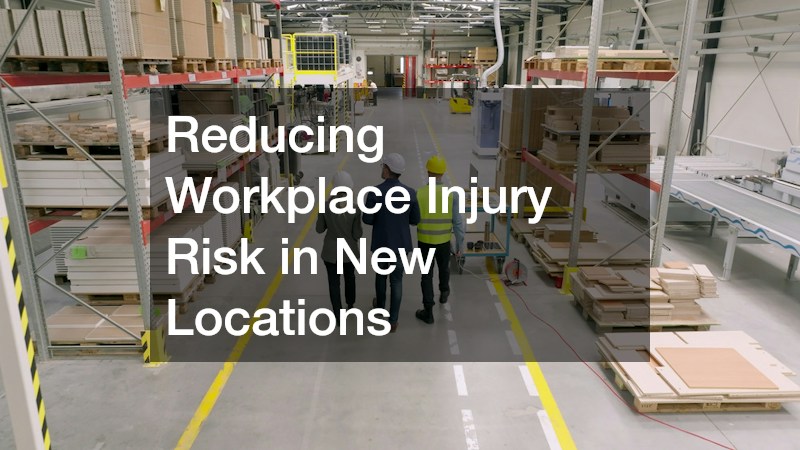
New facilities, especially ones still under construction or recently occupied, carry higher injury risk than established workspaces. Uneven flooring, exposed wiring, unmarked hazards, and unfamiliar layouts all contribute to accidents during the transition period. A thorough walkthrough before employees move in, paired with clear signage and temporary barriers around unfinished areas, significantly lowers incident rates. Training staff on new emergency exits and safety protocols on day one, rather than assuming they will figure it out, also matters more than most leaders realize.
- Conduct a safety audit before any employee occupies the new space
- Post emergency exit maps in high-traffic areas immediately
- Train new hires and transferred staff on site-specific hazards
- Document all safety briefings in case questions arise later
Handling Liability When Accidents Happen
Even with careful planning, accidents during expansion or relocation sometimes occur, and how a company responds in the first 24 hours often shapes the outcome more than anything else. Having a clear incident reporting process, with designated staff trained to document details and preserve evidence, protects both the injured party and the company. In serious cases, consulting with some of the best accident attorneys early can clarify what obligations the business has and what steps to avoid taking without legal guidance. Leaders should resist the urge to downplay incidents internally, since transparency tends to reduce legal exposure rather than increase it.
It also helps to review your insurance coverage before expansion begins, not after an incident occurs. Many standard policies do not automatically extend to new locations or temporary construction sites, leaving unexpected gaps.
Communicating Change to Keep Teams Steady
Employees handle uncertainty poorly when they are left guessing about what expansion or relocation means for their day-to-day work. A weekly email update or a biweekly short meeting, even one that simply says “no major changes yet, here’s what we’re still working through,” keeps rumors from filling the silence. Without that cadence, people fill the gaps with their own theories, and those theories are almost always worse than reality. Leaders who explain the reasoning behind decisions, rather than just announcing them, tend to retain more trust and loyalty through the transition. If a new facility is opening two states away, explain the market research or growth projections that drove the choice, not just the address and move-in date. Context turns a confusing directive into a decision people can at least understand, even if they don’t love it. Small gestures, like town hall sessions or an open question period, give employees a chance to voice concerns before they become bigger problems.
Anonymous question submission tends to surface the sharper, more honest concerns that people won’t raise in front of colleagues. Following up with written answers afterward, rather than letting questions dissolve into vague verbal reassurances, gives employees something concrete to reference later. Timing matters as much as content. Sharing news about layoffs, role changes, or site closures on a Friday afternoon, for instance, leaves people stewing over the weekend with no outlet to ask follow-up questions. Delivering difficult updates earlier in the week, with leadership available afterward, gives employees room to process and respond before rumors take hold.
- Send weekly updates during active transition periods, covering timelines, decisions made, and what’s still undecided
- Create an anonymous channel for employee questions and concerns, and respond to recurring themes within 48 hours
- Involve team leads in planning so information flows both directions, not just top-down announcements
- Hold brief weekly check-ins with leads to surface concerns before they spread informally
- Celebrate milestones publicly to maintain morale, whether it’s a signed lease, a hiring goal, or a completed safety audit
- Acknowledge uncertainty honestly rather than overpromising specific dates or outcomes
Conclusion
Expansion, relocation, and the liability that comes with both are manageable when you approach them with a clear plan and the right partners at each stage. Start by mapping out your timeline, securing dependable suppliers and movers, and putting safety protocols in place before problems arise rather than after. Keep your team informed throughout the process so trust stays intact even when circumstances shift quickly. With the right preparation, growth can strengthen your organization instead of straining it.