
Constructing a new commercial facility is one of the most significant milestones in the life of a business. Whether you are expanding a manufacturing plant, building a distribution center, or establishing a new corporate headquarters, the process represents more than just a real estate transaction; it is a fundamental operational investment. The building you create will dictate your workflow efficiency, your employee safety, your energy costs, and ultimately, your bottom line for decades to come.
However, the journey from a raw plot of land to a fully functioning facility is fraught with complexity. It requires a symphony of logistics, engineering, regulatory compliance, and vendor management. Many business owners underestimate the intricate phasing required to bring a project of this magnitude to completion on time and within budget. A delay in one area, such as utility installation or structural framing, can cascade into weeks of lost productivity and skyrocketing costs.
This guide is designed to walk you through the critical lifecycle of commercial construction. We will move beyond the basic architectural drawings to discuss the tangible, on-the-ground decisions that ensure your facility is built to last. We will cover structural choices that maximize versatility, safety implementations that protect your workforce, site aesthetics that enhance property value, and the final logistics of occupying your new space. By understanding these essential steps, you can navigate the construction process with confidence and build a foundation for future success.
Choosing a Structural Design for Maximum Versatility

The first major decision in any commercial build is defining the structural shell. In the past, industrial buildings were often segmented by support columns and load-bearing walls that dictated where machinery could be placed and how traffic could flow. Today, operational agility is the priority. You need a space that can adapt to changing market demands, new technology, and fluctuating inventory levels without requiring expensive renovations.
For modern warehousing, manufacturing, and logistics, the gold standard is often a pre-engineered steel structure designed with an open floor plan. The primary advantage here is the elimination of internal obstructions. By opting for a clear span building, you remove the need for interior support columns. This allows for wall-to-wall utilization of the square footage. Without columns getting in the way, you have complete freedom to configure pallet racking systems, assembly lines, and conveyor belts in whatever layout is most efficient. Furthermore, as your business evolves, you can completely reconfigure the floor plan without worrying about structural limitations.
Beyond layout flexibility, the structural design must also account for verticality and climate control. High ceilings are essential not just for stacking inventory, but for proper air circulation and heat stratification.
When designing the shell, consider:
- Future Expansion: Design the end walls of the structure to be “expandable,” meaning they can be easily removed to add additional bays in the future without compromising the integrity of the existing roof.
- Insulation Values: Don’t just meet the code minimum. High-performance insulation packages in the roof and walls can significantly reduce heating and cooling loads, paying for themselves within a few years of operation.
- Door Placement: Strategically place overhead doors to create a cross-breeze for summer ventilation, or to facilitate a “drive-through” workflow for vehicles, reducing the need for reversing and increasing safety.
Managing Heavy Construction and Vertical Assembly
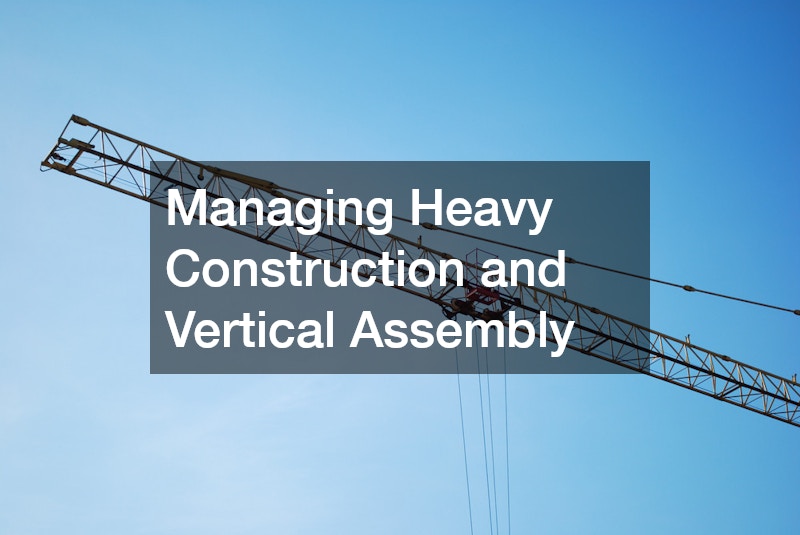
Once the foundation is poured and the anchor bolts are set, the project moves into the vertical assembly phase. This is often the most visually dramatic part of construction, where the skeleton of the facility rises from the ground. It is also the phase with the highest safety risks and logistical challenges. Erecting steel beams, positioning HVAC units on the roof, and setting heavy machinery requires precision and heavy-duty equipment.
Managing this phase requires strict vendor vetting. You cannot rely on general labor for vertical assembly; you need specialized teams with certified operators. The cornerstone of this stage is often the scheduling of professional crane service to handle the heavy lifting. The logistics here go beyond simply hiring a machine. You must calculate the reach and lift capacity required for your heaviest beams or units. If the crane is too small, it creates dangerous conditions; if it is too large for the site, it may struggle to maneuver or damage the surrounding ground.
- Lift Planning: Before any equipment arrives, a detailed lift plan should be drafted. This document outlines the weight of every load, the radius of the crane’s swing, and the ground bearing pressure.
- Ground Stabilization: Heavy lifting equipment requires solid ground. You must ensure that the soil where the outriggers will sit has been properly compacted to prevent sinking or tipping during a lift.
- Site Perimeter Safety: During overhead operations, establish a strict “drop zone” perimeter. No ground crew should be allowed within the swing radius of the load. This requires clear signage, barriers, and a dedicated safety officer to enforce the exclusion zone.
Engineering Durable Site Access and Logistics
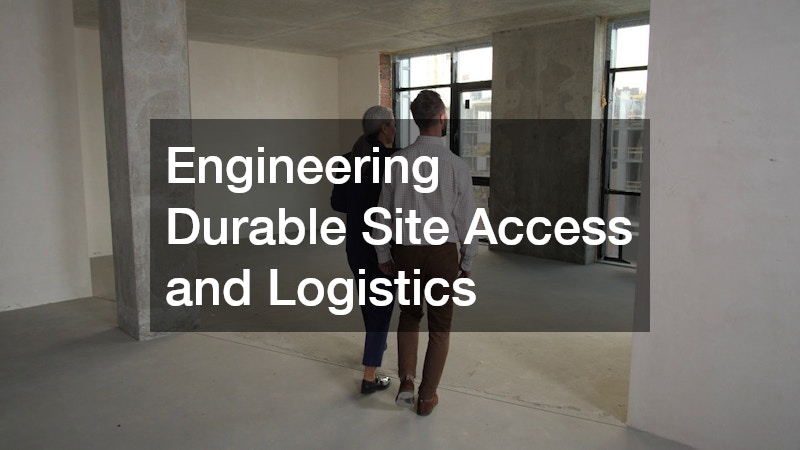
While the building itself draws the most attention, the “apron” and access roads surrounding it are the arteries of your operation. If your trucks cannot enter and exit efficiently, or if the ground fails under their weight, your facility will face immediate bottlenecks. The engineering of your site access must prioritize durability and load-bearing capacity above all else.
Commercial vehicles exert tremendous pressure on pavement. A standard asphalt mix designed for passenger cars will quickly rut and crumble under the frequent turning and braking of semi-trucks and heavy forklifts. For high-traffic industrial zones, particularly the loading docks and turning aprons, a reinforced concrete driveway is the superior choice. Concrete is rigid and distributes heavy loads over a wider area of the subgrade, preventing the deformation common with asphalt. It is also more resistant to fuel and oil spills, which can dissolve asphalt binders over time.
- Turning Radii: Analyze the swept path of the largest vehicle you expect to visit your facility. Ensure that the entrance and corners are wide enough so trucks do not have to jump the curb or swing into oncoming traffic lanes to make a turn.
- Slab Thickness and Reinforcement: For industrial use, a standard 4-inch slab is insufficient. You will likely need a 6 to 8-inch slab reinforced with rebar grids, not just wire mesh, to handle the torque of heavy tires turning in tight spaces.
- Water Management: Standing water is the enemy of pavement. Ensure the site is graded so that water flows away from the loading docks and the building foundation. In freezing climates, pooled water can turn into ice hazards for trucks or cause frost heave that cracks the pavement.
Installing Interior Rigging and Safety Systems

With the shell complete and the floor poured, the focus shifts to outfitting the interior for operational efficiency and worker safety. In a manufacturing or warehousing environment, how you move materials inside the building is just as important as how you get them to the building. Reducing manual lifting is key to preventing repetitive strain injuries and speeding up production.
One of the most effective upgrades for assembly areas or maintenance bays is the installation of a cable hoist system. Unlike forklifts, which require floor space and travel lanes, overhead lifting systems utilize the empty air space above the work area. Whether mounted on a jib crane or a bridge crane, these systems allow a single operator to lift and position heavy components with precision and minimal physical effort. When specifying these systems, consider the duty cycle—how often the lift will be used per hour—to ensure the motor and braking systems are rated for your production volume.
However, as you introduce verticality to your workflow—whether through overhead cranes, high-racking systems, or rooftop maintenance access—you introduce the risk of falls. Falls remain the leading cause of injury in the construction and industrial sectors. OSHA compliance is not optional; it is a moral and legal imperative.
- Inspection Access: If workers need to access the roof for HVAC maintenance, install permanent safety rails around the hatch and designated walkways to keep them away from the roof edge.
- Training Integration: The best equipment is useless without training. Ensure that part of your facility launch plan includes certification on all lifting and safety equipment for every employee who will use them.
Establishing Essential Utilities and Energy Sources
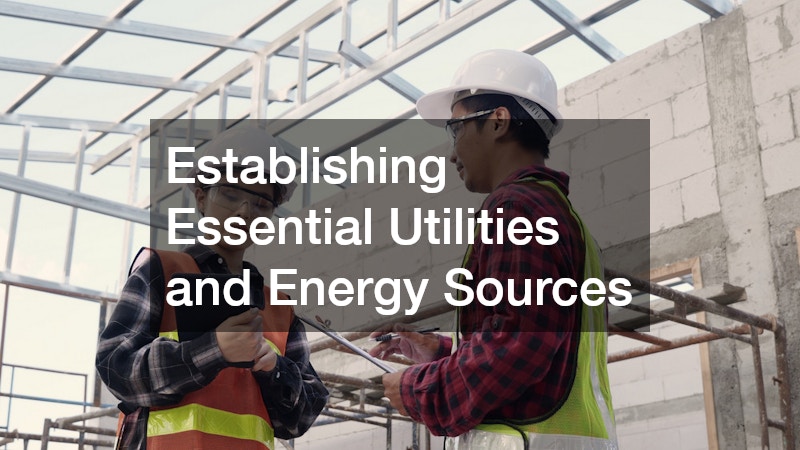
A commercial facility is a power-hungry entity. Between lighting tens of thousands of square feet, running production machinery, and keeping the space heated, your energy strategy is a major component of your operating budget. While electricity is standard, many industrial facilities require versatile fuel sources for specific applications where electric power is either too expensive or inefficient.
For facilities located in new industrial parks or rural areas where natural gas infrastructure may not yet be robust, setting up a dedicated propane service is a highly effective solution. Propane offers a high BTU output, making it ideal for heating large, open spaces like warehouses, where keeping the air warm is a constant battle against heat loss. Radiant tube heaters powered by propane can be hung from the ceiling to heat the objects and people below, rather than wasting energy heating the air near the roof.
- Tank Sizing and Placement: Work with your provider to determine the correct storage capacity. For high-volume users, a large, permanent tank installed on a concrete pad at a safe distance from the building is standard.
- Remote Monitoring: specific to modern energy management, ask for telemetry systems on your tanks. This allows the supplier to monitor your fuel levels remotely and schedule deliveries automatically, ensuring you never run dry during a production spike or a cold snap.
- Redundancy: Even if you have natural gas, maintaining a secondary fuel source can be a crucial backup for critical systems like generators, ensuring business continuity during utility outages.
Developing a Professional and Safe Exterior Landscape
The exterior of your facility is the first thing clients, investors, and potential employees see. While it may be tempting to treat landscaping as an afterthought, a neglected exterior suggests a neglected business. Moreover, the grounds play a functional role in site security and building preservation.
It is advisable to hire a professional landscaper early in the construction process, rather than waiting until the building is finished. They can work with the civil engineers to ensure that the final grading of the soil supports proper drainage and that the plant selection is appropriate for the site’s exposure. For commercial properties, the goal is “low maintenance, high impact.” You want hardy, native plants that can survive without constant watering or pruning, reducing your long-term groundskeeping costs.
- Security Sightlines: Keep shrubs and hedges trimmed low near entry points and windows to eliminate hiding spots.
- Lighting Clearance: Ensure that trees do not block the throw of your parking lot floodlights. Dark spots in a parking lot are a safety liability for employees leaving late at night.
- Root Management: Be mindful of where large trees are planted relative to underground utilities and foundations. Aggressive root systems can damage pipes and crack pavement over time.
Implementing Preventive Hygiene and Maintenance
One of the most overlooked aspects of new construction is the reality that pests are looking for a new home just as eagerly as you are. A new building, with its settling foundation and numerous utility penetrations, offers plenty of entry points for rodents and insects. If you wait until you see a mouse to call for help, the infestation is likely already established in the walls or insulation.
- Exterior Baiting: Establishing a perimeter of bait stations around the building exterior intercepts rodents before they reach the structure.
- Lighting Choices: Insects are attracted to certain light spectrums. Using sodium vapor lights or LED fixtures with specific wavelengths near doorways can reduce the number of flying insects drawn to your entrances.
- Door Seals: The loading dock is the biggest vulnerability. Install high-quality brush seals or vinyl weatherstripping on all dock doors. Ensure that dock levelers have side brushes to close the gaps that exist when the plate is in the stored position.
- Waste Management Zones: Designate where dumpsters and compactors will sit. They should be placed on concrete pads that can be power-washed regularly, and ideally located away from employee entrances to prevent pests from migrating from the trash to the breakroom.
Executing a Seamless Transition and Occupancy
The final weeks of construction are a blur of inspections, punch lists, and anxiety. However, the physical completion of the building is only half the battle. The relocation of your business—moving people, products, and machinery from the old site to the new one—is a logistical feat that can paralyze operations if mishandled.
- The IT Migration: Your network is your nervous system. Coordinate with your IT team and the movers to ensure that servers are the last thing off at the old site and the first thing running at the new one. Internet service providers often need months of lead time to activate new fiber lines, so schedule this early.
- Inventory Purge: Do not pay to move items you don’t need. Use the move as an opportunity to liquidate obsolete inventory and recycle broken equipment.
- Phased Relocation: If possible, move the facility in phases. Start with the warehouse stock, then the manufacturing equipment, and finally the administrative offices. This allows you to maintain partial operations throughout the transition.
- The Final Flush: Before the first box arrives, ensure the new facility is clean. Construction dust is abrasive and can damage electronics and machinery. A professional deep clean of the floors and overhead beams is essential before occupancy.
Conclusion
Building a new commercial facility is a testament to your business’s growth and ambition. It is a complex, multi-year journey that transforms capital and vision into steel and concrete. The success of this endeavor does not rely on a single decision, but on the aggregation of hundreds of choices—from the type of structural frame you select to the durability of your driveway and the safety systems protecting your team.